SUMMARY
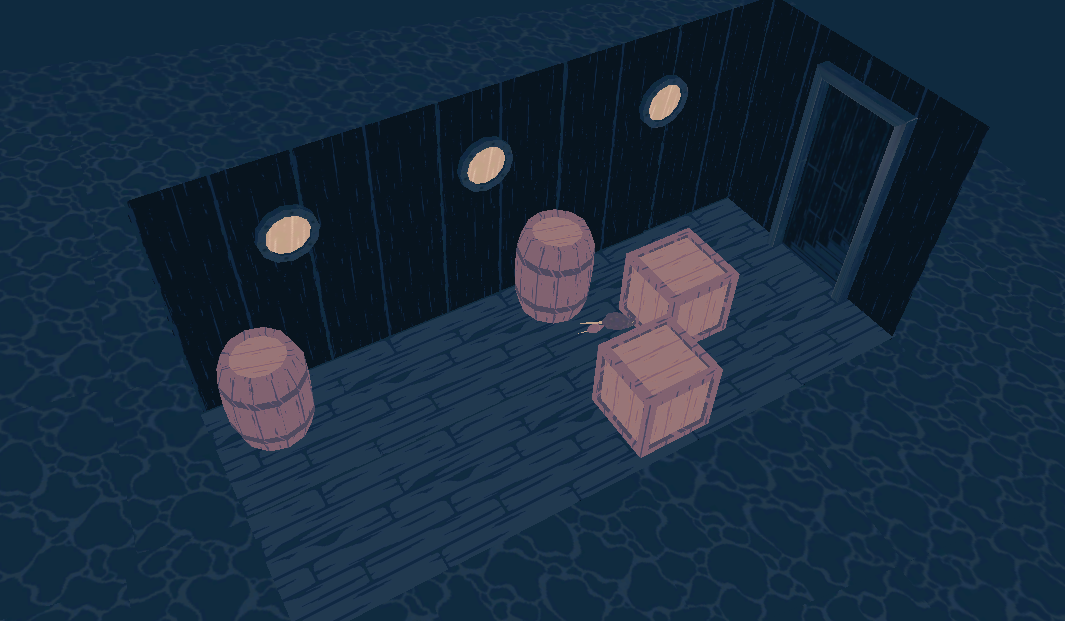
Cargo Rats is a physics-based 3d isometric puzzle game developed within 72 hours for the Ludum Dare 46 game jam.
ROLE
Visual design, 3d modelling, 3d texturing, user interface design, system design.
TEAM
Braden Emerson
Jennifer Gu
Iavor Ivanov
Maheeppartap Singh
Hannah Zaitlin
CONCEPT
framing
The goal of Ludum Dare 46 was to create a game that fit the theme of “keep it alive” within the 72 hour deadline. My team wanted to work with 3d and physics objects, and quickly decided we wanted to use those concepts in a puzzle game. As we brainstormed, I began sketching out visual design concepts, which led us to the concept of leading a group of rats out of a sinking ship. The benefit of this concept was that it provided an in-universe explanation for time limits and levels, as well as lending itself to a limited but interesting visual style.
We were inspired by top down action-adventure games such as Enter the Gungeon and The Binding of Isaac, which captured the fast paced, challenging, and chaotic style of gameplay we were looking for, as well as involving upgrades that came with downsides.
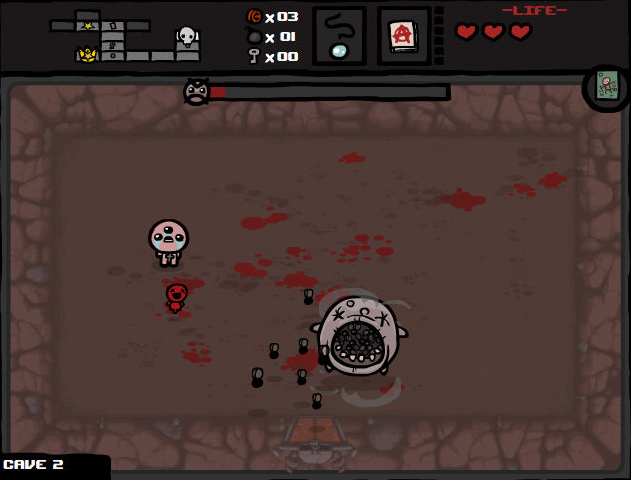
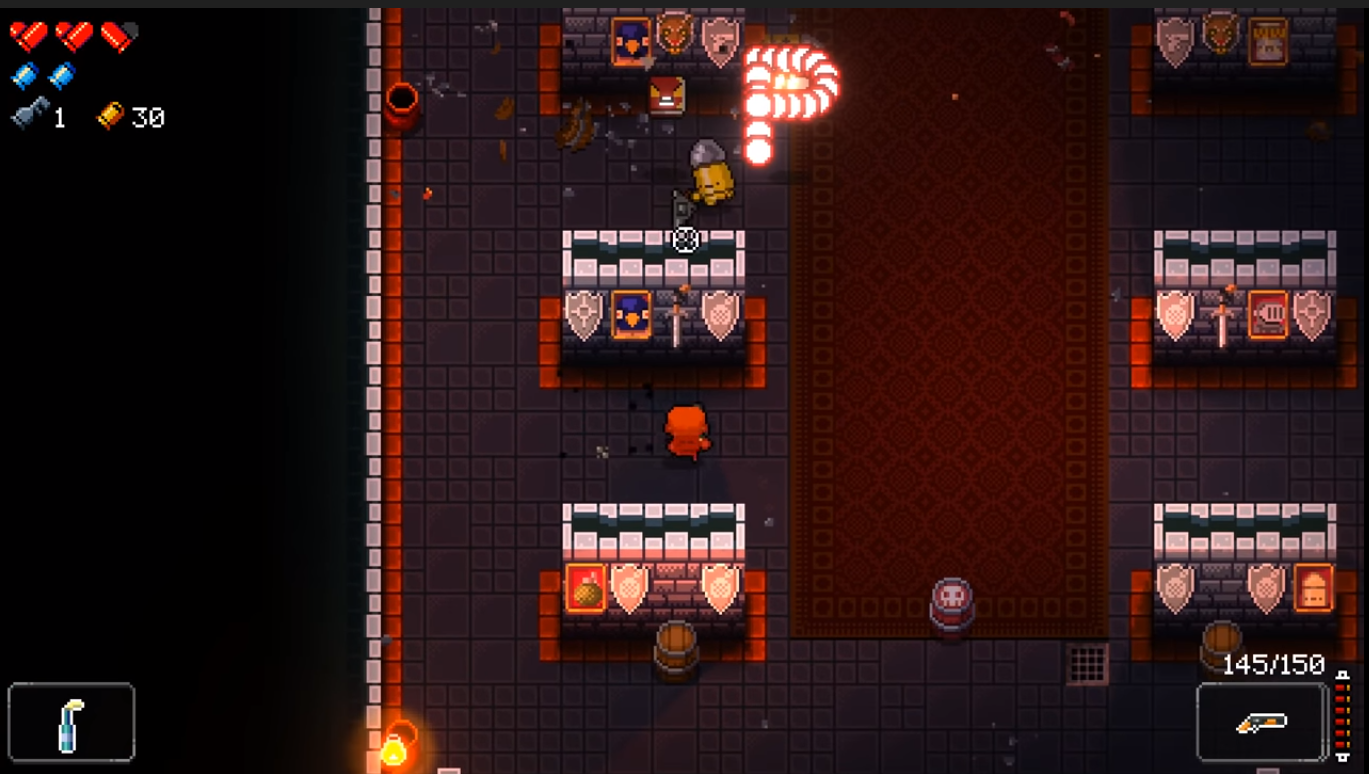
Screenshots from The Binding of Isaac and Enter the Gungeon.
visual development
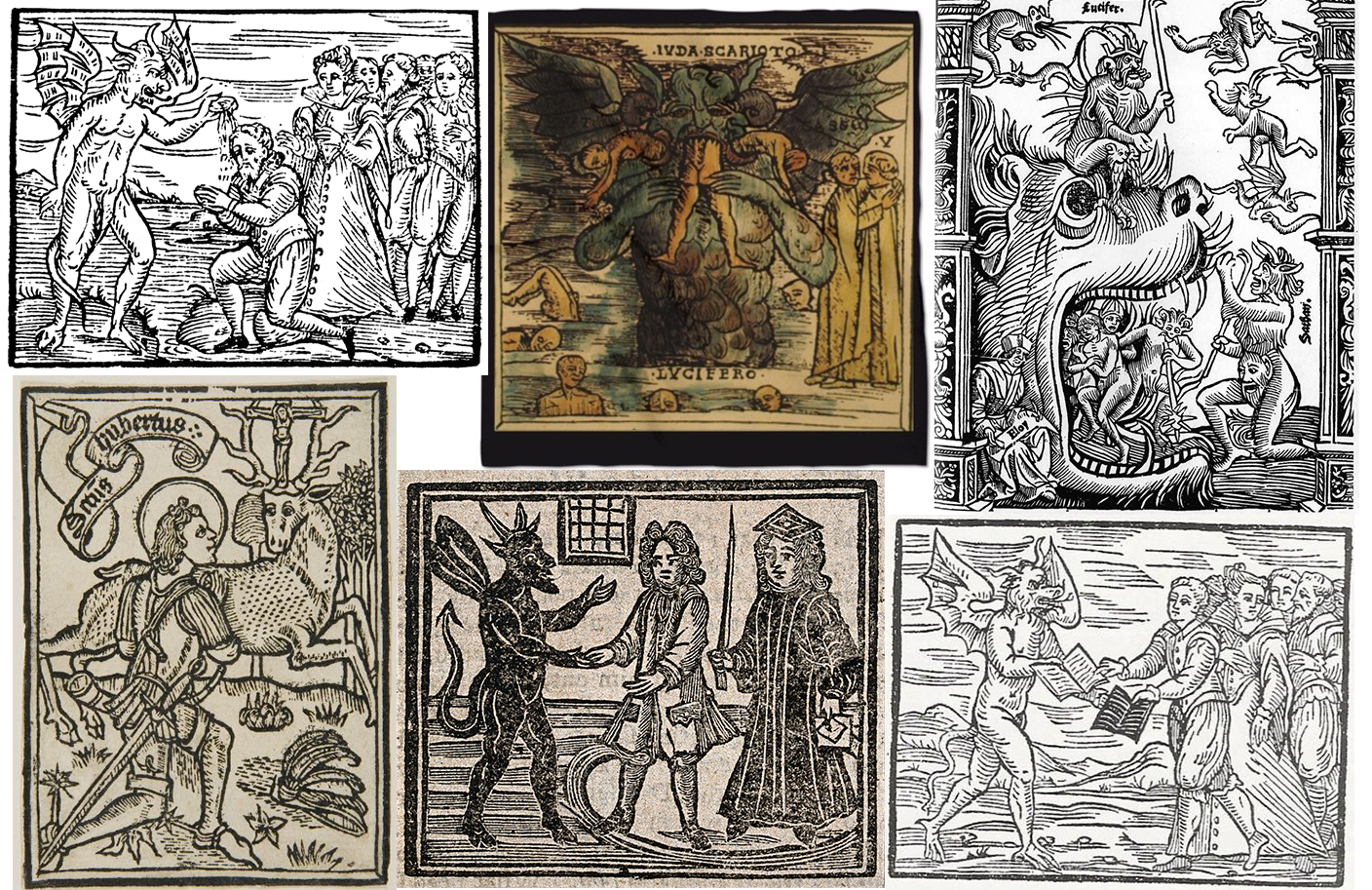
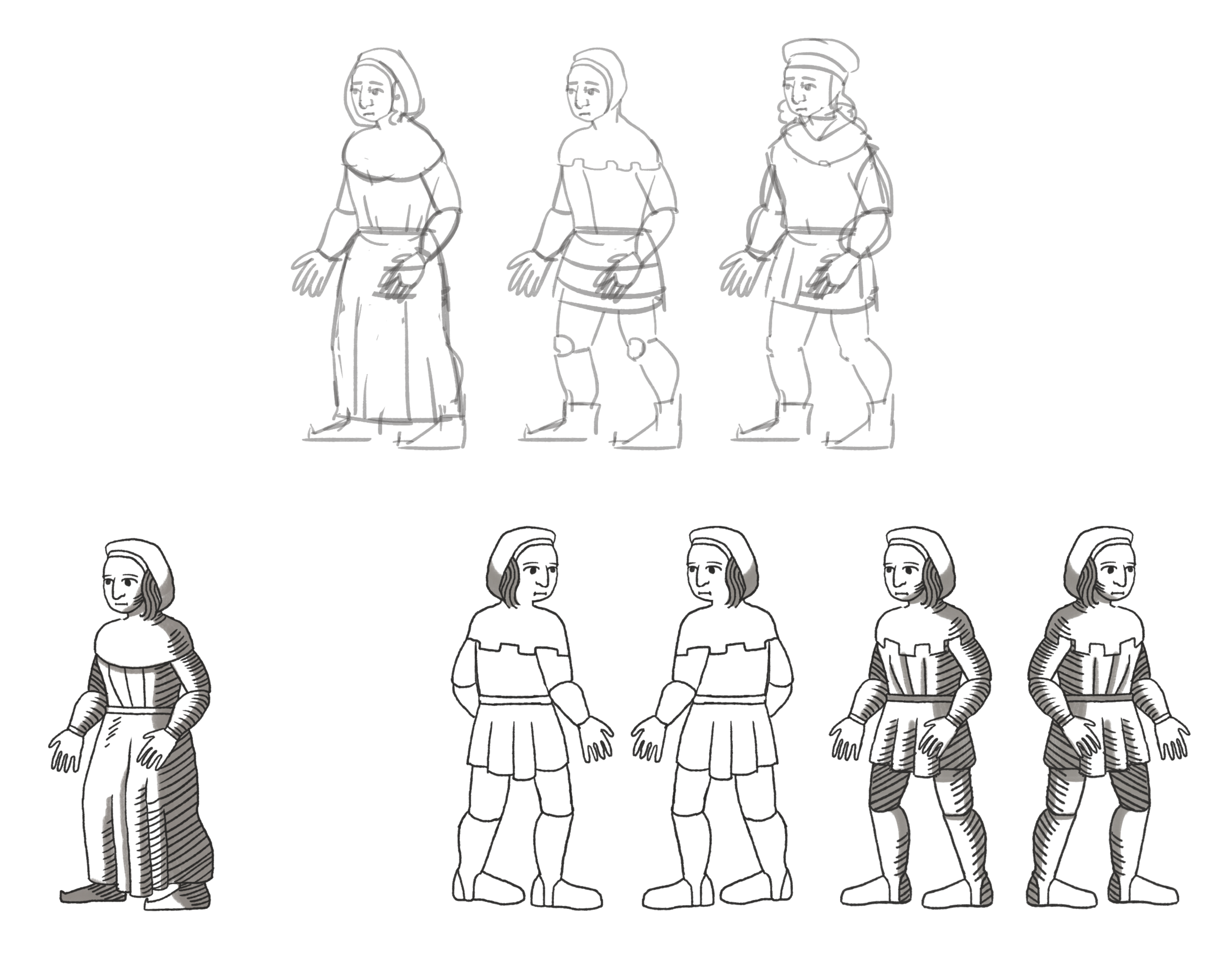
I began to consider the visual design of the game. We wanted to set our game in hell, and wanted a style that would lend itself to 2d sprite animation and a limited color palette. I was inspired by medieval woodcuts, as their designs were recognizable while also being stylized in a flat 2d perspective. The subject matter also lent itself to our game, as it often dealt with devils, demons, hand to hand combat, and magic.
We initially considered having several player classes that used different types of weapons. In later iterations, we narrowed to a single player character that could choose between weapons over the course of the game.
DEVELOPMENT
animation
In order to animate our player and enemies, I used the Duik Bassel rigging tool for Adobe After Effects. This allowed me to break the character model up into rigid sections that would be rigged for streamlined animations. During this time, my team also refined the weapons and actions that the player would be able to use.
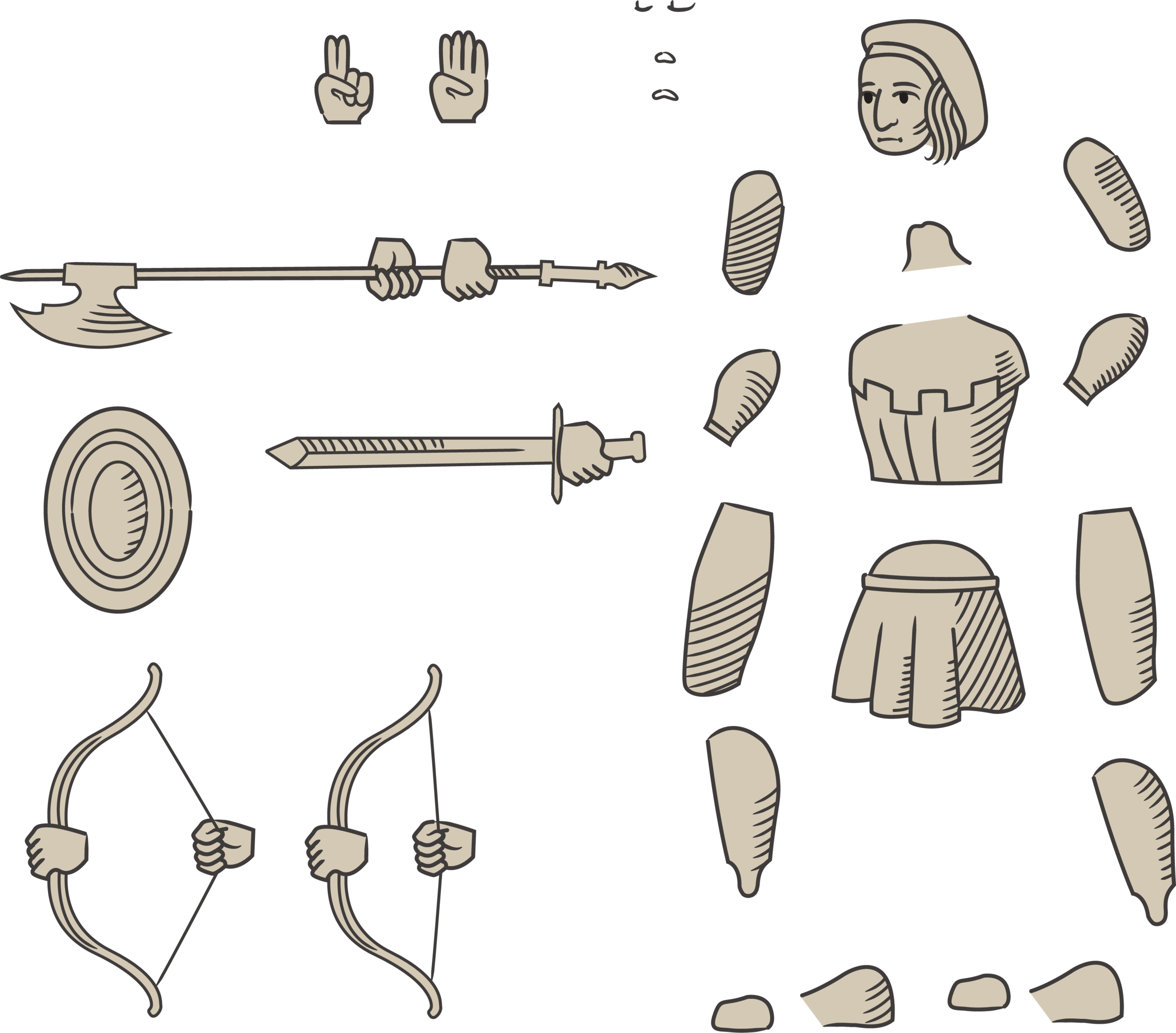
I then used the character rig to animate the walk cycle, death animation, and various attack animations that would be used in the game. I focused on providing clear visual feedback through the animations to show when an attack was in progress or when the player was invulnerable. I repeated this process for the two enemy types, exported all animations into Unity as sprite sheets, and manually set the hit boxes for each attack.
interface
While my teammate worked on implementing the visuals into gameplay, I began work on the menus. Because the game uses a relatively complex upgrade system, it was important to focus on creating menus that were clear without overwhelming the player with information. I began by deciding on a structure for the menu system and how the player would move between screens.
[INSERT INFO ARCH DIAGRAM]
I then worked to incorporate the UI into the visual design of the game by using stylized icons and short text descriptions. By keeping icons representing upgrades and downgrades on screen, the player would be able to easily remember their abilities.
[SCREENSHOTS OF MENUS AND UPGRADE/COST ICONS]
refinement
Once all of the art, animations, and UI assets were implemented, the final stage was playtesting to ensure that each wave of enemies would become progressively more challenging and that all of the upgrade systems worked as intended. After 72 hours, the final game was submitted to Ludum Dare for judging.
REFLECTION
Fields of Sacrifice came in 705th overall and 147th in the graphics category out of 2538 total submissions. The game received positive feedback from players and was praised for the unique and expressive art style.
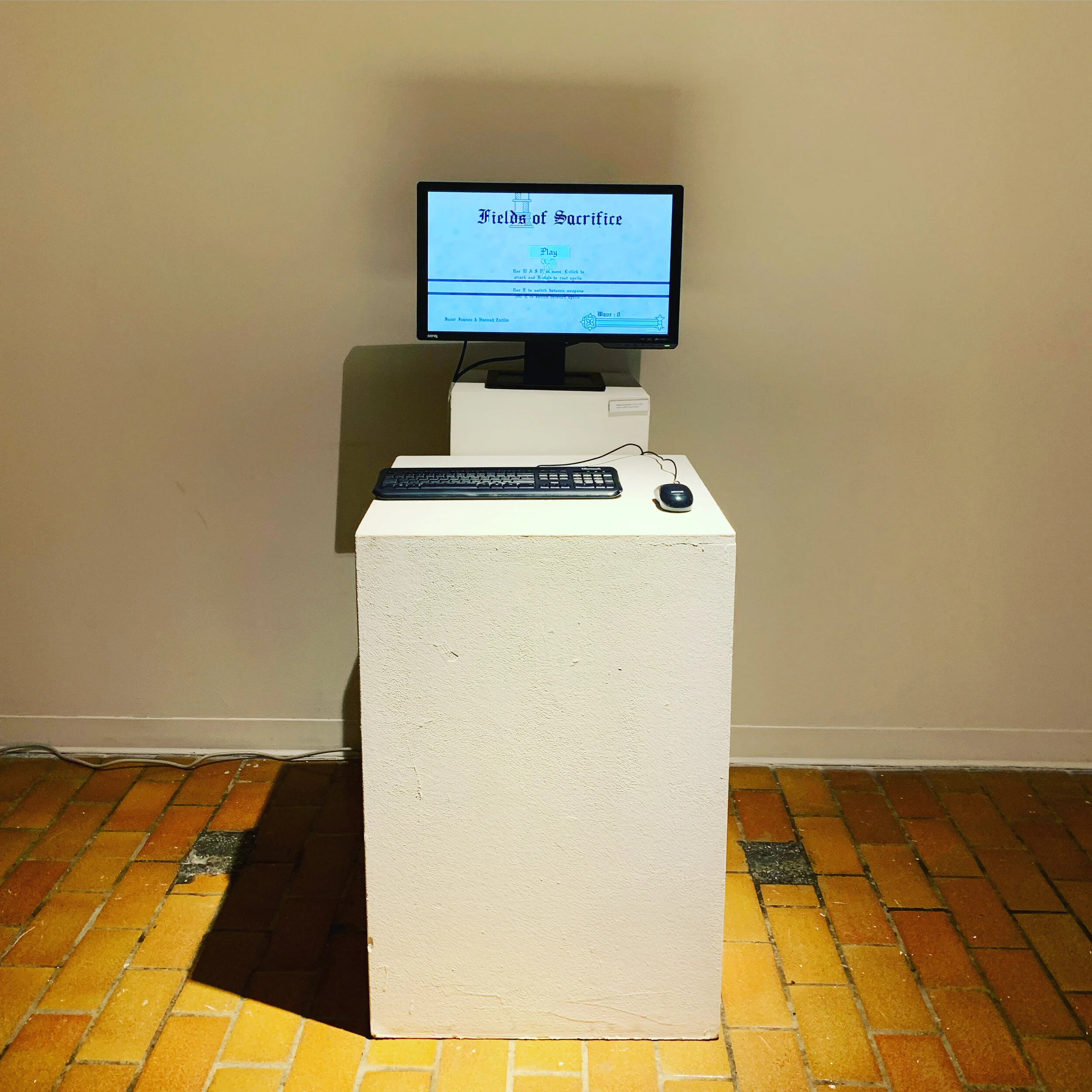
My team continued to refine the game, making improvements that we were unable to address during the Jam due to time restraints. This included adding visual feedback to enemies taking damage, UI improvements for display on various screen sizes, and bug fixes. We exhibited the improved game at the March 2020 Horse Show at the Alberta University of the Arts.
This was the smallest game development team I have ever worked on, and meant that I was taking on many roles, allowing me to gain experience in how art and animations are implemented on the developer side. It was also my first time working with 2d rigged animation rather than individually drawn sprites, which greatly sped up my workflow.